The Enduring Allure of Geometric Patterns of the East
From the intricate tilework of the Alhambra to the mesmerizing muqarnas vaulting in Isfahan, Geometric Patterns of the East represent one of humanity's most sophisticated artistic traditions. These designs are far more than decoration—they embody mathematical precision, spiritual contemplation, and a worldview where order underlies apparent chaos. For professionals in architecture, design, or education, and for hobbyists or business owners seeking inspiration, understanding these patterns unlocks a language that speaks across centuries and cultures.
Where Geometry Meets Spirituality
At the heart of Eastern geometric art lies a profound union of faith and reason. Unlike Western ornamentation that often evolved from naturalistic representation, Islamic geometric patterns—the most prominent subset of Geometric Patterns of the East—emerged from a theological impulse to avoid idolatry. The result is an art form that abstracts reality into pure form, using circles, stars, and polygons to suggest the infinite nature of the divine.
Foundational Shapes and Their Meanings
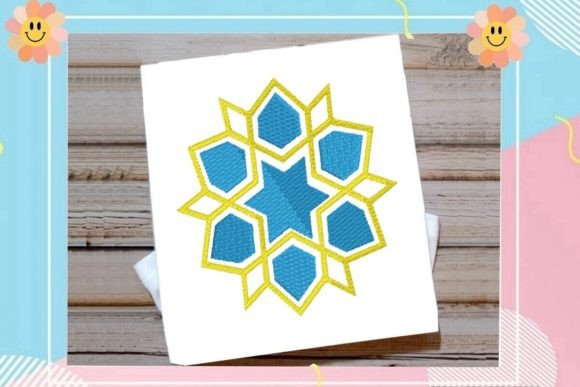
The circle is the mother of all forms in this tradition. From it, the craftsman derives the square, the triangle, and the star polygon—each carrying symbolic weight. The square represents the material world and its four elements; the triangle points upward toward the divine or downward toward creation. The six-pointed star (Seal of Solomon) and the eight-pointed star (khatam) are among the most ubiquitous motifs, appearing in everything from mosque mihrabs to textile patterns. Their repeated interlocking suggests unity and multiplicity coexisting.
A master artisan in Fez or Bukhara would draw patterns using only a compass and straightedge, creating complex tessellations that modern mathematicians only began to fully understand in the late twentieth century. For instance, the girih tiles of Iran (literally "knot" patterns) use five distinct tile shapes to create quasi-crystalline structures. In 2007, researchers at Harvard and Princeton discovered that these medieval designers had anticipated Penrose tilings by five centuries—a stunning example of practical geometry outpacing formal theory.
Applications Across Industries and Professions
Geometric Patterns of the East are not confined to historical monuments. Contemporary designers, architects, and even data visualizers draw from this wellspring of form.
Architecture and Interior Design
Modern architects incorporate these patterns to bring rhythm, scale, and cultural resonance to buildings. The facades of the Louvre Abu Dhabi, designed by Jean Nouvel, use a vast geometric dome that filters light through a complex pattern inspired by overlapping palm fronds—but the underlying logic is pure Eastern geometry. Similarly, interior designers use laser-cut screens based on mashrabiya latticework to create privacy while casting intricate shadow patterns. Hotels, corporate lobbies, and luxury residences increasingly feature custom Geometric Patterns of the East in metal, wood, or stone.
Product Design and Branding
From packaging for premium teas to the logos of tech startups, these patterns signal craftsmanship, heritage, and precision. A brand that wants to convey reliability and timelessness might adopt an octagonal motif derived from Islamic star patterns. Consumer goods—rugs, ceramics, lighting fixtures—often sell better when they evoke the authenticity and detail of handmade Eastern geometry. For creators, studying these patterns offers a master class in proportion and repetition.
Education and STEM Outreach
Teachers use these patterns to make geometry tangible for students. Drawing a twelve-pointed star from a circle teaches concepts like angle bisection, symmetry groups, and iteration in a way that feels like art, not abstraction. Researchers in computational design generate new patterns using algorithms that mimic the medieval craftsman's method, exploring how aesthetic rule sets can produce infinite variety. This cross-pollination between art and science is a key reason why Geometric Patterns of the East remain relevant in curriculum development.
Formal Characteristics That Define the Style
To recognize and use these patterns effectively, one must understand their core properties. They are not random; they follow strict generative logic.
- Repetition and Symmetry: Most patterns are periodic—they repeat in two directions to cover a surface infinitely. Symmetry operations include rotations, reflections, and glide reflections. The symmetry groups range from simple 2-fold to complex 12-fold, with 8-fold being particularly common in Persian architecture.
- Star Polygons: These are the primary building blocks. A 8/3 star (8 points, stepping over 3 vertices) is a typical element. The interior angles and intersections create secondary shapes—diamonds, pentagons, and hexagons—that interlock perfectly.
- Color as Structure: Unlike Western patterns where color is often applied after form, in Eastern geometric art color can define the geometry. In a typical Persian mosaic, blue and turquoise tiles create the star motif, while white or black tiles fill the background. The colors are not arbitrary; they enhance the perception of depth and movement.
- Scalability: A pattern that looks complex on a 3-inch tile can be scaled to a 30-foot dome without losing clarity. This is because the relationships between shapes are based on ratios, not absolute measurements.
Practical Advantages for Creators and Consumers
Why choose Geometric Patterns of the East for a project? Several tangible benefits emerge.
Visual Complexity from Simple Rules
These patterns offer high visual interest without requiring figurative art. A patterned wall or carpet can serve as the focal point of a room, yet the repetition creates a calming, meditative effect. Unlike a busy mural, geometric patterns do not demand narrative attention—they allow the eye to rest while still providing richness.
Cultural Authenticity and Storytelling
In a globalized market, consumers value objects that carry a story. A tile with an eight-pointed star references a thousand-year tradition of Islamic science and art. Using such patterns can differentiate products and spaces, giving them a sense of depth and provenance that mass-produced decor lacks.
Mathematical Robustness
For digital fabrication, these patterns are ideal. They can be described algorithmically, making them easy to generate in parametric design software. CNC routers, laser cutters, and 3D printers can produce them with high precision. This compatibility with modern manufacturing is why Geometric Patterns of the East appear in everything from facade panels to jewellery.
Considerations When Working with These Patterns
Despite their versatility, there are pitfalls to avoid. Cultural appropriation is a real concern: using sacred geometry without understanding its context can offend communities for whom these patterns hold religious meaning. Research the origins of a specific motif before deploying it commercially. For example, the eight-pointed star (khatam) appears in many contexts, but its use in a Shiite shrine carries a weight that a hotel lobby should respect from a distance.
Another consideration is legibility at scale. A pattern that works perfectly on a small tile can become chaotic when enlarged, or conversely, too sparse. Testing at full size is essential. Also, be aware of color harmonics: traditional palettes often used lapis lazuli blue, turquoise, emerald green, and white against a dark or neutral background. Modern designers sometimes replace these with grays or pastels, but the visual balance may shift dramatically. It's wise to study successful examples, such as the tilework of the Registan in Samarkand or the Al-Azhar Mosque in Cairo, to understand how color interacts with geometry.
Trends and Future Directions
The interest in Geometric Patterns of the East shows no sign of waning. Several trends are emerging.
- Digital Generative Art: Artists and coders are using machine learning to create new patterns that learn from historical datasets. These are being used in NFTs, video games, and virtual reality environments where procedural generation can produce infinite variety while maintaining the visual grammar of Eastern geometry.
- Sustainable Architecture: Parametric geometries inspired by muqarnas are being used to design shading structures that reduce solar gain in hot climates. The self-similarity of these patterns allows for efficient cooling and natural ventilation, merging traditional wisdom with green building.
- Therapeutic and Educational Spaces: Hospitals and schools are installing patterned tiles or wallpapers based on Islamic geometric designs, as studies suggest that repetitive, ordered patterns can reduce stress and improve focus. This is a direct application of the contemplative function these patterns originally served in religious contexts.
- Collaborative Global Studios: Designers in Dubai, Istanbul, and New York are collaborating to revive lost techniques. The use of ceramicists from Kashan or woodcarvers from Damascus ensures that the patterns are executed with the same skill as their ancestors. This trend emphasises authenticity and supports traditional craftspeople.
Observing Patterns in Everyday Life
Once you start noticing Geometric Patterns of the East, you see them everywhere. In the floor tiles of an airport lounge, the branding of a luxury car, the interface icons of a meditation app. Their ubiquity is a testament to their underlying power—the human mind is drawn to order, repetition, and the suggestion of infinity. Whether you are a researcher studying symmetry groups, a business owner selecting materials for a showroom, or a hobbyist sketching patterns in a journal, the geometric traditions of the East offer a bottomless well of inspiration and insight. They remind us that the most beautiful designs are often those that follow the deepest and most ancient rules.
In practical terms, starting with a single shape—a circle divided into twelve equal parts—can lead to an entire universe of patterns. The key is to approach them not as static images but as living languages, developed over centuries by individuals who saw geometry as a path to both beauty and truth. That combination of aesthetic and intellectual richness is what makes Geometric Patterns of the East endure, and why they will continue to influence creators and thinkers for generations to come.